An education project of Restorative Reproductive Medicine Foundation
Reclaim Reproductive Health with the Evidence.
RRM Academy is the educational home of Restorative Reproductive Medicine: free courses, patient guides, and clinical training to find root causes and restore function, not manage symptoms.
For Patients For Clinicians Donate
A 501(c)(3) public charity · EIN 93-4594315
By the numbers
"My attending told me to do nothing. 'If she's going to miscarry, she's going to miscarry.' That moment broke my heart."
Our research library indexes studies from
What Is Restorative Reproductive Medicine?
If you have been told your pain is normal, your cycles are difficult, or your infertility is unexplained, and something inside you has been quietly insisting that cannot be the whole story, you are reading the right page.
Painful periods are not a personality trait. Irregular cycles are not "just how you are." Infertility is not unexplained. It is undiagnosed.
RRM Academy is the educational home for Restorative Reproductive Medicine. The courses here train patients to understand their own cycles and clinicians to identify the root cause of reproductive dysfunction and treat it directly.
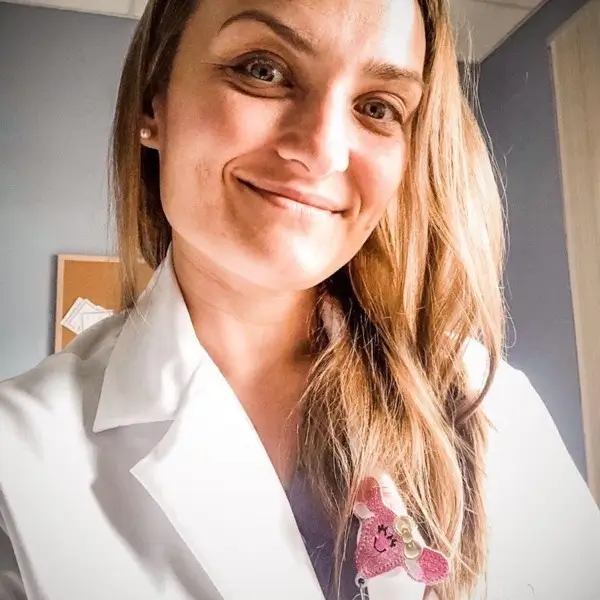
RRM Academy was founded by Dr. Naomi Whittaker, MD, Board-Certified OBGYN, MIGS, NFPMC, FCI. She is a NaProTechnology fellowship-trained surgeon. The diagnostics, surgical standards, and educational content here reflect her NaProTechnology fellowship training and clinical practice.
The goal is not indefinite condition management. It is answers. Restored function. And the years ahead that belong to you.
Why Symptom Suppression Fails: The Check Engine Light
If you have spent years being told to live with what you know is not normal, this analogy will sound familiar.
When the warning light comes on in your car, you don't cover it with tape. You open the hood.
For decades, women have been handed the tape. Suppressive medications to mask the pain. Hormones to quiet the cycle. Bypass procedures when the cycle is too damaged to read. For the partner, abnormal semen parameters are overlooked or attributed to stress. The underlying disease keeps advancing, unseen.
Restorative Reproductive Medicine is the under-the-hood approach. RRM-trained clinicians investigate the fundamental why behind your symptoms. They identify whether the problem is hormonal, anatomical, inflammatory, nutritional, or some combination. Then they treat it.
It addresses the underlying cause rather than managing symptoms, and it belongs at the start of care.
How Restorative Reproductive Medicine Works
Every patient is different, and RRM does not follow a single fixed protocol. The same principles guide every case: find the cause, treat the disease, restore the function.
It starts with the question: why? RRM evaluates both partners. A woman's cycle is diagnostic data, not background noise. For an RRM-trained physician, a complete cycle chart surfaces what conventional workups miss. But the workup does not stop there. Male factor assessment, hormonal panels, semen analysis: diagnostics for both partners are part of the picture from the start.
Treatment targets the disease, not the symptom. What that looks like depends on what is found. For endometriosis, it may mean excision surgery to remove the disease itself rather than suppressing it with hormones. For tubal blockage, it may mean selective catheterization to clear and reopen the fallopian tubes without full surgery. For hormonal dysfunction, it may mean targeted medical support timed to the cycle. Because RRM is multidisciplinary, the care team might include physicians, naturopaths, nutritionists, pelvic floor physical therapists, mental health professionals, or fertility awareness educators, depending on what you need.
When the underlying cause is treated, function returns. When treatment reaches the underlying disease, hormonal rhythms normalize and ovulation can return. For couples who want to conceive, natural conception becomes possible, sometimes for the first time. RRM repairs the reproductive system rather than routing around it. Most people working through an RRM workup see a clearer diagnostic picture within three to six cycles, though the path and pace depend on what is found.
You are part of the process. RRM cooperates with the natural cycle. You become an active participant in your own care, not a passive recipient of a protocol. Body literacy is a clinical tool, and understanding your own body changes the conversations you have with every provider.
What the early work looks like
- Both-partner assessment: hormonal panels, semen analysis, and male factor evaluation alongside the female workup. This is usually the entry point.
- Cycle charting: a complete cycle chart that surfaces what conventional workups miss. Often layered with the assessment above; sometimes precedes it, depending on where you start.
- Finding a provider trained in cause-based care: the curated pathway at /what-is-rrm/#get-started. Some patients find their provider before charting; most build the early data first and then bring it to a clinician who knows what to do with it.
Two Approaches. One Choice.
RRM starts from a different question. Not "how do we work around this?" but "what is actually wrong, and can it be addressed?" For most couples, the answer is yes.
Restorative Reproductive Medicine
- Goal: Find the cause. Treat the disease. Restore normal function.
- Method: Cause-based diagnostics for both partners. Cycle charting. Targeted medical and surgical treatment from a multidisciplinary team that may include physicians, naturopaths, nutritionists, pelvic floor physical therapists, mental health professionals, and fertility awareness educators.
- Your Role: An informed participant in your own care. You are not a recipient of a protocol. You are the one who understands what is happening, and why.
Conventional Suppressive and Bypass Medicine
- Goal: Suppress symptoms or bypass the problem.
- Method: Suppressive medications. Standardized protocols. Procedures that route around reproductive function rather than restoring it.
- Your Role: A recipient of the protocol.
- The cost: Symptoms are masked while disease keeps advancing underneath. Diagnoses are delayed by years on average. Hormonal suppression does not stop disease, it hides it.
You Are in the Right Place
If you are looking for answers about your own body
You belong here if:
- You have been told your painful or irregular cycles are "normal," and you know they are not.
- You have been diagnosed with endometriosis, polyendocrine metabolic ovarian syndrome (PMOS / PCOS), or recurrent miscarriage and want more than indefinite symptom management.
- You carry a diagnosis of "unexplained" infertility. (Undiagnosed is the more accurate word. RRM finds what was missed.)
- You and your partner want to understand why conception has not happened and want a cause-based answer.
- You have been through one or more IVF cycles, or been told donor eggs or a hysterectomy is your only option, and you are looking for a different question to be asked about your body.
- You have been told your age or AMH puts you out of options, and you want to know what a different workup might still find.
- You prefer natural conception and want to know what that path actually requires. See the RRM vs. IVF course.
If you are a clinician or allied professional
You belong here if:
- You are a physician in OB/GYN or family medicine who wants to offer patients real diagnostic and restorative options beyond suppressive medications and specialist referrals.
- You are a nurse practitioner, midwife, nutritionist, mental health provider, or allied health professional who wants deeper expertise in cycle-based diagnostics and root-cause care.
- You are a fertility awareness educator who wants clinical grounding for the work you do with clients.
- You want to understand how NaProTechnology-based medicine, restorative surgery, and complementary disciplines integrate into a full patient care model.
The Endometriosis Self-Survey
More than 7,500 women have taken the Endometriosis Self-Survey. Many tell us it confirmed their suspicions. Pain timing, cycle irregularity, cramping, bowel and bladder symptoms: the survey reads them as the connected picture they are, not as isolated complaints clinicians can dismiss one at a time.
It is not a diagnosis. It is a structured self-assessment that maps your experience to the patterns investigative care actually looks for, so you can walk into your next appointment with the right questions and a clearer account of what your body has been telling you.
Built on a Moment That Should Not Have Happened
"I'll never forget a patient I saw during my residency. She had a history of miscarriages and was pregnant again, terrified. My attending told me to do nothing. 'If she's going to miscarry, she's going to miscarry.' That moment broke my heart."
Dr. Whittaker built RRM Academy because of her. And the thousands like her. Women with real, diagnosable conditions who were told their pain was normal. Clinicians who wanted to help and were never taught how. Those are two separate failures, and they compound each other. Dr. Whittaker is a Board-Certified OBGYN and NaProTechnology fellowship-trained physician. She knows what it looks like when the training gap meets the care gap. RRM Academy exists to close both: rigorous education for professionals across medicine, nursing, nutrition, and allied health, and honest, evidence-grounded information for patients who are tired of waiting for answers that never come. If you have been carrying a question your doctor would not answer, you are exactly who Dr. Whittaker built this for.
Common Questions
- Is this backed by real evidence? Yes. The RRM Academy Research Library contains 5,800 scholarly works, indexed from medical journals, textbooks, and clinical references. Most are peer-reviewed; all are catalogued for review. You can read them yourself and follow the citations. The evidence is there. It has always been there. Most patients were just never told about it.
- Will this help me advocate for myself with my doctors? That is exactly what it is for. Students often arrive saying "I don't even know what questions to ask." They leave knowing how to screen a surgeon, what to expect from a real diagnostic workup, and how to tell the difference between a provider who is investigating their condition and one who is just suppressing their symptoms.
- I am not a medical professional. Is this for me? Many students are patients, not clinicians. Some are both. The courses are built so that anyone dealing with a reproductive health challenge can understand what is happening in their body, what their options are, and what good care actually looks like. You do not need a medical degree to deserve that information.
- How do I find a surgeon or provider I can trust? Start with the right questions. Do they perform excision, not ablation? Do they evaluate both partners? Do they chart cycles before diagnosing? RRM Academy gives you the knowledge to evaluate any provider, not just the ones on a list. If you want a starting list while you build that confidence, the curated "how to find a provider" pathway is at /what-is-rrm/#get-started. Some students stay with their current doctor and have better conversations. Others find an RRM-trained professional. Either way, you walk in informed.
More questions? See the full list of common questions about RRM or browse all FAQs.
Research and Commentary
Research Library. 5,800 scholarly works, organized and searchable. The most current evidence in reproductive endocrinology, surgical outcomes, cycle-based diagnostics, and NaProTechnology.
Expert Commentary. Dr. Whittaker and the RRM Academy faculty translate the research into clinical context. What a new study actually means. What the evidence supports. What it does not.
Pillar Guides. Plain-language explainers of Restorative Reproductive Medicine, NaProTechnology, FEMM, and NeoFertility, plus the most common questions about RRM.
Supported by our Uterus Super Heroes



Start With the Evidence
Your body is not broken. It has signals. RRM can help you read them.
Most of the people who find RRM Academy have spent years being told the wrong things. That your pain is normal. That your cycles are just difficult. That your only option is to suppress or bypass. None of those were the whole story.