Frontiers in Reproductive Health, 2026

Fertility awareness methods and waiting conduct in idiopathic infertility: a prospective observational study

F Parazzini , Andrea Graziani , M Guida

Author affiliations (4)
  • Mario Negri Institute for Pharmacological Research ROR

  • University of Padua ROR
  • University of Naples Federico II ROR
  • Unit of Andrology and Reproductive Medicine, Department of Medicine, University of Padova, Padova, Italy.
DOI10.3389/frph.2026.1753325 PMID41883420
Read at source

RRM Academy Synopsis

Fertility Awareness Beat IVF for Unexplained Infertility, 51% to 18%

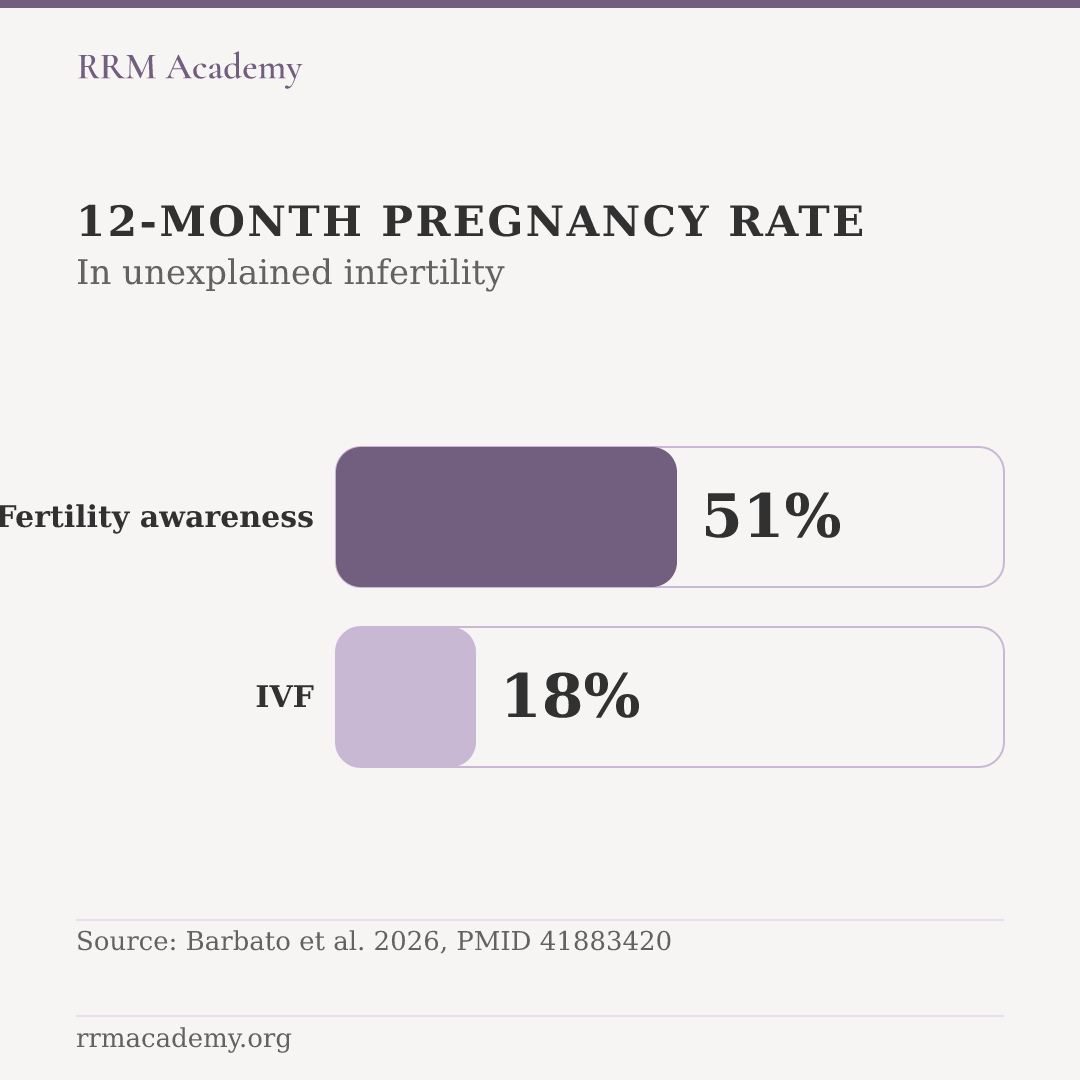
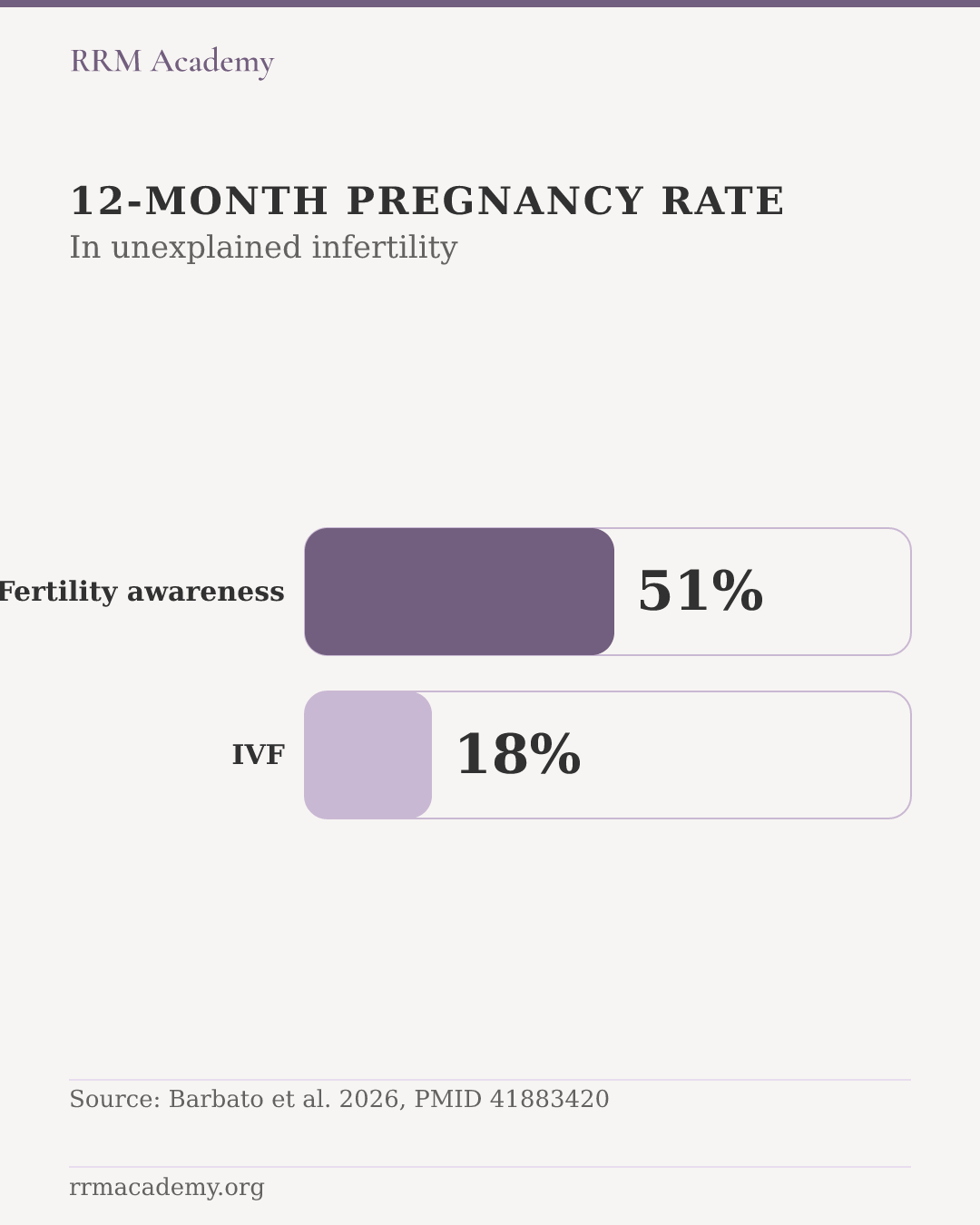
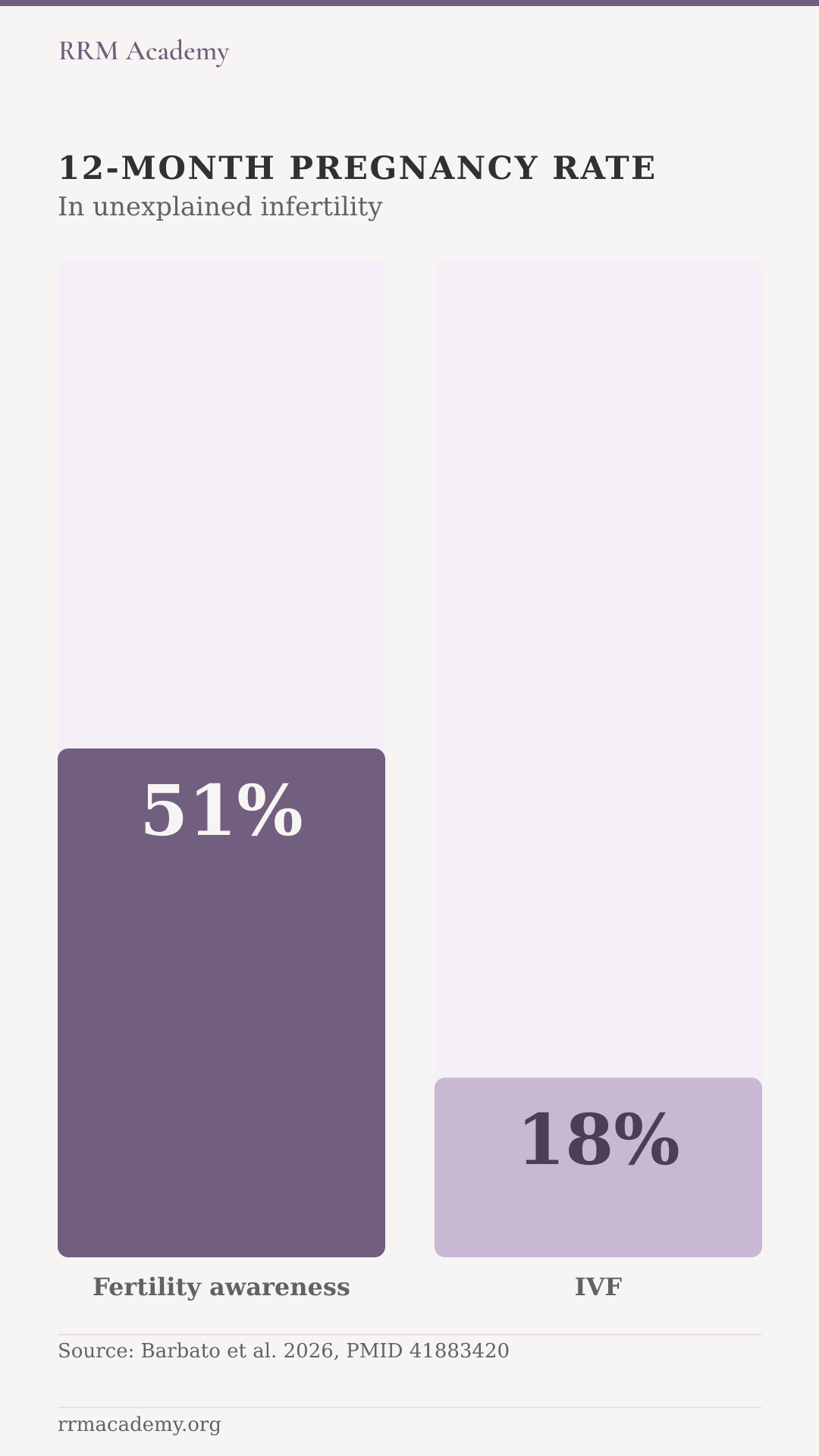
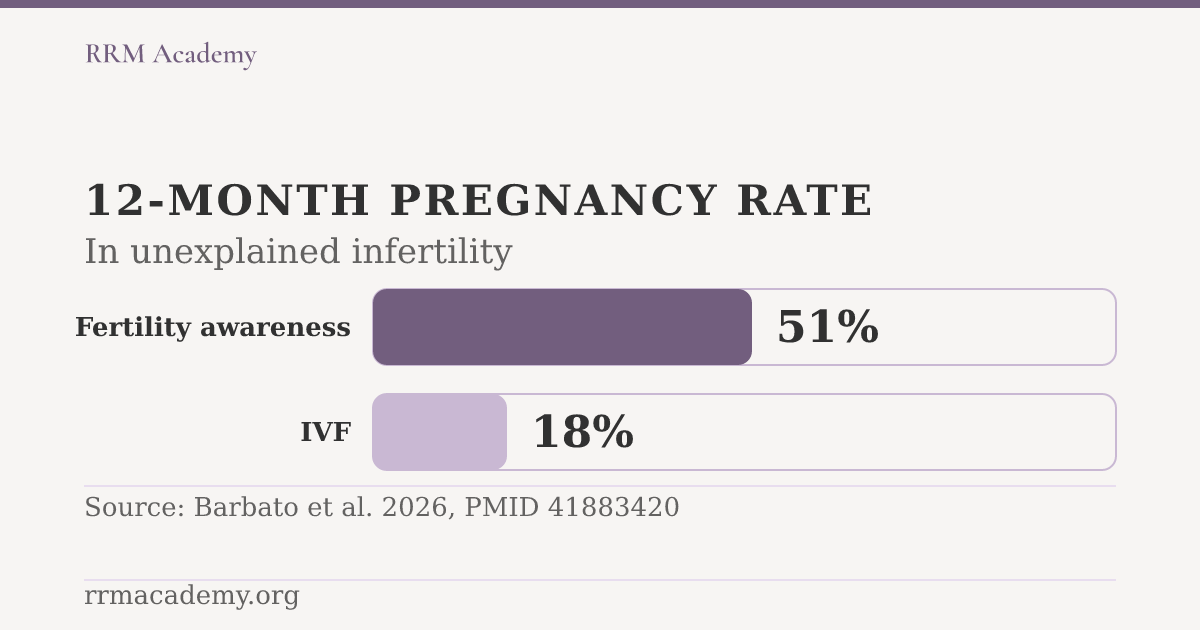
About half (51%) of couples with unexplained infertility who tracked their fertile days conceived naturally within 12 months. Among couples who went straight to IVF instead, fewer than 1 in 5 (18%) got pregnant in the same period.

Fertility awareness 51%; IVF 18%. Source: Barbato et al. 2026, PMID 41883420Fertility awareness 51%; IVF 18%. Source: Barbato et al. 2026, PMID 4188342012-MONTH PREGNANCY RATEIn unexplained infertilityFertility awareness51%IVF18%Source: Barbato et al. 2026, PMID 41883420rrmacademy.org

Key Findings

  • 51% of couples who tracked their fertile days conceived naturally within 12 months (21 out of 41 couples)
  • Only 18% of couples who went straight to IVF got pregnant in the same 12 months (10 out of 56 couples)
  • Among women under 34 in the fertility tracking group, 90.9% conceived, compared to 30% in the IVF group
  • Among women ages 35 to 39, 36.7% in the fertility tracking group conceived, compared to 17.4% in the IVF group
  • Couples were not randomly assigned to groups; those who tracked chose to try naturally first, and those in the IVF group went directly to assisted reproduction

Clinical Implications

These numbers challenge the assumption that going straight to IVF is the fastest path to pregnancy for couples with unexplained infertility. Tracking fertile days and timing conception naturally produced a higher pregnancy rate at 12 months, especially for younger women. For couples told they have unexplained infertility, this study suggests the label may mean undiagnosed rather than untreatable, and that trying a fertility-awareness approach first is worth serious consideration.

Study Notes

Researchers followed 97 couples across multiple clinics for 12 months. All had been diagnosed with unexplained infertility. Forty-one couples chose to track their fertile days and try to conceive naturally; 56 couples went straight to IVF or other assisted reproduction. The researchers tracked who got pregnant and when.

RRM Context

Restorative reproductive medicine starts with a simple question: why hasn't conception happened? When a couple is labeled unexplained, that label is not an answer. This study supports the principle that a restorative approach, starting with understanding the cycle rather than bypassing it, can produce real results. The 51% vs 18% finding belongs in every conversation a couple has before agreeing to go straight to IVF.

Abstract

Introduction

Couple infertility is a common clinical condition that is too often treated with assisted reproductive techniques (ARTs) without a proper evaluation of both male and female factors. To improve the likelihood of natural conception, fertility awareness methods (FAMs) are widely used.

Methods

We performed a multicenter prospective study enrolling couples with primary idiopathic infertility who were seeking natural conception. Participants were followed for 12 months using FAMs, and their outcomes were compared with those of couples who only used ARTs. The aim of our study was to evaluate the pregnancy rate after 12 months among couples with idiopathic infertility using FAMs compared with those who immediately pursued ARTs. We evaluated 41 couples in the FAM group and 56 couples in the ART group.

Results

In the FAM group, we reported a pregnancy rate (PR) of 51.22%. Among women aged <34 years, we reported a PR of 90.9%, while it decreased to 36.7% among women aged 35-39 years. In the ART group, 10 couples achieved pregnancy (PR 17.8%). Within this group, we reported a PR of 30% among women aged <34 years and 17.4% among women aged 35-39 years.

Discussion

After 12 months of unprotected intercourse without spontaneous conception in women younger than 35 years or after 6 months in women aged 35-39 years, couples should undergo a complete multidisciplinary diagnostic evaluation involving both the male and female partners. If a diagnosis of idiopathic infertility is established at the end of this process, couples (especially younger ones) may be advised to wait an additional 12 months while using FAMs, as no advantage has been observed with direct access to ARTs. They could then be referred to ART if a spontaneous pregnancy is not achieved during this period.

PMID 41883420 41883420 DOI 10.3389/frph.2026.1753325 10.3389/frph.2026.1753325